
🔥 Black Friday Robot Vacuum Deals 2026: picks worth watching →
You are standing in your living room, staring at a floor that somehow collects dust, pet hair, and mystery crumbs overnight. The decision between Shark vs Roborock robot vacuum models feels overwhelming, but this guide breaks down the top contenders so you can choose with confidence. Whether you have hardwood, carpet, or a mix of both, we have assessed the latest releases from both brands to help you find the perfect cleaning companion. For more insights, check out our Comparisons page.




Buying Guide
Suction Power and Cleaning Performance
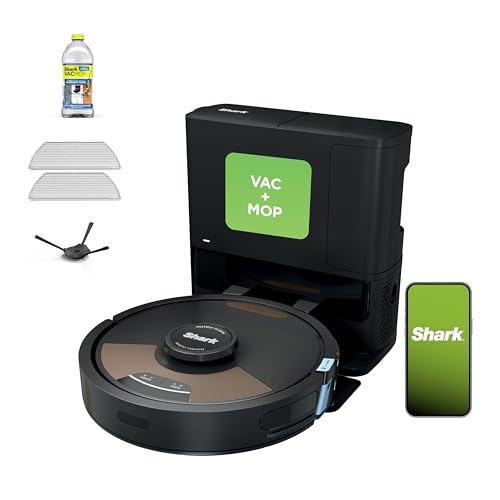
Suction power determines how well a robot vacuum picks up dirt, pet hair, and debris from various floor types. Roborock models like the roborock 2026 New Saros 20 Flow Robot Vacuum offer up to 36,000 Pa, while the roborock 2026 New Qrevo 2 Pro Set Robot Vacuum provides 25,000 Pa. Shark models such as the Shark UV Reveal PowerDetect Robot Vacuum use PowerDetect technology to adjust suction automatically on carpets. For homes with high-pile carpets, higher suction is beneficial, but for hard floors, even mid-range options work well.
Both brands excel in edge cleaning, with Roborock featuring FlexiArm Edge Mopping and Shark using CleanEdge Detect. If you have pets, the anti-tangle systems on Roborock models are a standout, while Shark’s UV stain detection reveals hidden messes. For a deeper dive, explore our Best Shark Matrix Plus Robot Vacuum and Mop guide.
Mopping Technology and Carpet Care
Mopping capabilities vary widely between Shark and Roborock. Roborock uses SpiraFlow 2.0 pressurized self-cleaning roller mops that wash with warm water, while Shark employs HyperSonic mopping that scrubs 100 times per minute. For carpeted homes, Roborock automatically lifts the mop up to 15 mm, and the Shark PowerDetect ThermaCharged NeverTouch Pro uses heated mop washing at 185°F to sanitize. If you have a mix of floors, look for models that can vacuum carpets before mopping hard floors to avoid wetting rugs.
Both brands offer self-cleaning docks that wash and dry mops, but Roborock’s RockDock heats water to 212°F, while Shark’s NeverTouch Pro base reaches 185°F. For homes with allergies, HEPA filtration in Shark models is a plus, but Roborock’s warm-air drying reduces bacteria growth. Consider your floor type and how often you mop when choosing.
Smart Features and Navigation
Navigation and obstacle avoidance are critical for hands-free cleaning. Roborock uses Reactive AI Obstacle Recognition that identifies over 300 objects, while Shark’s NeuroNav AI combines RGB sensors and LiDAR for precise mapping. The Shark Matrix Plus Robot Vacuum & Mop Combo uses 360° LiDAR for accurate home mapping, and Roborock’s Quick Mapping rapidly creates layouts. Both allow you to set no-go zones and schedules via their apps.
For homes with thresholds, Roborock’s AdaptiLift Traverse 3.0 crosses up to 3.46 inches, while Shark models handle standard doorways. If you have a multi-level home, both brands support mapping multiple floors. For more on smart vacuums, see our Vacuum Guides page.
Battery Life and Maintenance
Battery life determines how much area a robot can clean before recharging. Shark’s NeverStop Battery runs up to 3 hours on bare floors, while Roborock models typically last 2-3 hours depending on suction mode. Both brands feature recharge and resume, so the robot returns to its base and continues cleaning. Maintenance is simplified with self-emptying bases: Shark holds up to 60 days of debris, and Roborock’s dock empties dust and refills water automatically.
Roborock’s Zero-Tangle system reduces hair wrap on brushes, while Shark’s self-cleaning brushroll is engineered to pick up more hair. Consider how often you want to empty the bin or clean the brushes. For a comparison of other models, read our shark StainStriker vs bissell little green article.
Final Thoughts
Choosing between Shark and Roborock comes down to your specific needs: for powerful suction and advanced mopping with a higher budget, the roborock 2026 New Saros 20 Flow Robot Vacuum excels with its 36,000 Pa suction and SpiraFlow 2.0 mop, while the Shark UV Reveal PowerDetect Robot Vacuum offers UV stain detection and a heated dock at a more accessible price point. Both deliver exceptional cleaning, so focus on your floor types, pet situation, and desired features to make the best choice.
Related Guides
Frequently Asked Questions
Which brand has better suction, Shark or Roborock?
Roborock generally offers higher suction power, with models like the Saros 20 Flow reaching 36,000 Pa, while Shark models like the UV Reveal use PowerDetect technology to adjust suction for carpets. Both are effective, but Roborock has an edge for deep carpet cleaning. For more details, see our Reviews section.
Can Shark robot vacuums mop as well as Roborock?
Roborock’s SpiraFlow 2.0 pressurized roller mop provides consistent wet cleaning with warm water, while Shark’s HyperSonic mopping scrubs at 100 times per minute. Both are excellent, but Roborock’s mop lifts automatically on carpets, which is better for mixed floors. Shark’s UV stain detection helps identify hidden messes.
What is the best robot vacuum for pet hair in 2026?
For pet hair, the roborock 2026 New Qrevo 2 Pro Set Robot Vacuum with its Zero-Tangle system and 25,000 Pa suction is a top choice, while the Shark Matrix Plus Robot Vacuum & Mop Combo offers HEPA filtration and a self-cleaning brushroll. Both handle pet hair well, but Roborock’s anti-tangle design reduces maintenance.
Do Shark and Roborock robot vacuums work with smart home systems?
Yes, both brands support Amazon Alexa and Google Assistant for voice control. They also have dedicated apps for scheduling and mapping. Roborock models like the Qrevo Curv 2 Flow offer 3D Map Display, while Shark’s SharkClean app allows customization. Both are compatible with 2.4GHz Wi-Fi networks.


